



Trust is harder to earn in real estate than it used to be.
Buyers and sellers scroll through endless listings, social media ads, and agent websites every day. Most of it looks the same. AI tools have made it easier to create content. But they have also made generic content easier to spot.
That creates a problem. Real estate is among the biggest financial decisions most people will ever make. Few people are willing to trust a real estate professional based on a polished real estate website or a few marketing claims alone.
This is where content in real estate marketing changes the equation. It’s no longer just a way to generate leads. It’s one of the strongest trust signals an agent can send before the first call, email, or showing.
When content shows real expertise and local real estate knowledge, it helps agents feel less like strangers. It gives buyers and sellers a reason to believe they’re dealing with someone who knows the market and can guide them through a high-stakes decision.
Highlights
- Real estate content builds trust before prospects ever contact an agent.
- Hyper-local insights and original market analysis are harder to copy and easier to trust.
- Generic AI-generated content often fails because it lacks firsthand knowledge and perspective.
- Educational content helps buyers and sellers make decisions while reducing uncertainty.
- A strong content library can support referrals, repeat business, and long-term credibility.
Why trust has become the biggest challenge in real estate marketing
Real estate marketing strategies have no shortage of content. What many agents struggle with is trust. Buyers and sellers have more information today. But they often feel less certain about who to believe.
Buyers and sellers are more skeptical today
People approach real estate decisions with caution. The stakes are high. And the wrong agent can mean lost time, missed opportunities, or a lower sale price. On the other hand, a if an agent offers you to buy real estate from a contractor that doesn’t rely its business on contractor credit card, you may discover late further issues when buying such real estate. Always check for the ones that are covered from all angles.
Traditional marketing strategies don’t carry the same impact they once did. Buyers want proof, not promises, especially when deciding who can help them buy or sell a property. That need for reassurance is growing.
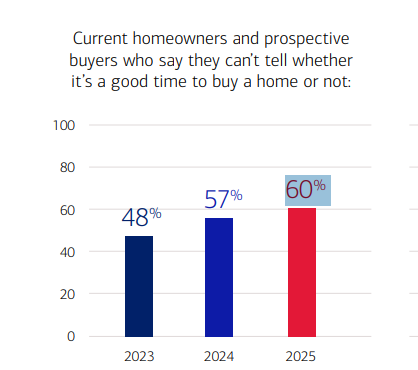
According to the Bank of America 2025 Homebuyer Insights Report, 60% of homeowners and prospective buyers are unsure whether now is a good time to buy. In that case, content that answers questions and reduces uncertainty stands out.
Generic real estate content no longer builds credibility
The internet is full of AI-generated neighborhood guides, market updates, and listing descriptions. Most of them say the same thing.
That creates a sea of interchangeable content.
A guide to a neighborhood might not offer much value if it reads as though it were written by someone who has never walked its streets. Readers can spot the difference. When content lacks firsthand knowledge or local insight, readers tend to ignore it.
Content is how prospects decide whether you’re credible
Most prospects form an opinion before they ever reach out. Zillow reports that 36% of sellers now find agents online. That means content, your real estate website, and your broader marketing efforts often shape trust long before the first conversation.

People research agents before they contact them
The research process starts well before a call or meeting. Buyers and sellers search Google, browse each social media platform, compare marketing materials, watch videos, and visit real estate websites.
Every piece of content, from blog posts to social media profiles, is part of the evaluation. A market update, a neighborhood guide, an open house recap, or an educational video can answer questions and demonstrate expertise through effective real estate marketing.
Take a first-time buyer, for example. They may read several articles before deciding which agent feels most prepared to guide them.
Your digital presence is part of your trust signal
In the modern real estate funnel, your first “showing” is often your LinkedIn profile or Instagram bio, not a property tour.
This is why your visual branding is your most immediate trust signal. A professional AI-generated headshot can help your online presence match the level of service you provide. Imagine a seller comparing two agents. They may feel more confident contacting the one with a polished and consistent digital presence.

Expertise is easier to demonstrate than to claim
Many real estate agents and brokers describe themselves as local experts. Prospects hear that claim all the time.
What stands out is evidence. Consider content that explains real estate trends and predictions. Or content that breaks down pricing data or answers common buyer concerns.

This shows real knowledge. For instance, an agent who publishes an analysis of why inventory is tightening in a specific neighborhood provides far more proof of expertise than a tagline on a homepage.
The types of content that function as strong trust signals
Not all content marketing builds trust in the same way. The strongest trust signals come from content that:
- Shows a level of knowledge that generic content cannot match
- Offers useful guidance
- Proves expertise
Hyper-local neighborhood guides
The best real estate marketing ideas, such as neighborhood guides, go beyond simply listing nearby restaurants and parks. They answer questions that only someone with local knowledge can address.
You have to use people-first content strategies. This means you have to write for your audience. Your target audience wants to know about commute patterns, school options, weekend traffic, noise levels, and trade-offs that don’t appear in property listings.

For example, a guide that explains why one street stays quiet while another gets congested during school pickup hours feels more credible than a generic overview. Specific details show real familiarity with the area.
Original market analysis and commentary
Publishing market statistics is easy, but effective marketing requires meaningful interpretation. Explaining what those numbers mean is where expertise becomes visible.
Market analysis helps potential clients understand trends and their potential impact. For example, an agent might explain why rising inventory in one neighborhood doesn’t necessarily mean prices will fall. That type of interpretation gives readers context. It also shows that the agent can do more than repeat data from a report.
Content that demonstrates operational excellence
Buyers and investors judge an agency by what happens after the contract is signed. Content that explains maintenance workflows, communication processes, reporting standards, or tenant management systems shows prospects how an agency operates day to day.
That detail answers questions before a call even happens and gives investors confidence that their assets will be managed well.
Your marketing campaign can highlight the systems behind the service. For example, showcasing the use of landlord software for maintenance tracking and reporting demonstrates transparency and organization. When agencies explain how they operate, they show prospects that there’s a process behind their promises. That can become a strong source of trust.
Educational content that helps buyers and sellers make decisions
Many potential buyers spend hours researching before they contact an agent, realtor, or real estate business. They compare listings, research neighborhoods, and try to understand what they can afford.
This stage of the buying journey is exactly where good real estate content earns trust. For example, linking to a mortgage down payment calculator gives readers something useful they can act on right away. It also shows that your brand gets what buyers are actually worried about.

And the confusion is real. According to the National Association of Realtors’ 2025 Profile of Home Buyers and Sellers, first-time buyers typically put down 10% while repeat buyers average around 23%. This surprises many people.

Layer in the fact that different loan types, like FHA, VA, and conventional loans, all come with different minimum requirements. It’s easy to see why buyers feel overwhelmed. Content that helps clear up that confusion doesn’t feel like marketing. It just feels helpful, and that’s the whole point.
Point-of-view content from agents and brokers
People don’t connect with content that sounds like anyone could have written it.
A clear point of view helps agents stand out. That might mean sharing an opinion on local housing supply, pricing trends, or new developments in the area.
For instance, an agent who explains why they believe a neighborhood is undervalued offers something readers cannot get from a standard market report. Perspective makes expertise feel more human and authentic.
What separates trust-building content from content that gets ignored
A lot of real estate content attracts attention for a moment and then disappears. Trust-building and conversion-focused content tends to share a few traits that make it feel more credible and useful.
Firsthand experience over surface-level information
People can tell when content comes from experience rather than research alone.
Local knowledge adds context that generic content often misses. Consider an agent who explains how traffic patterns change in a neighborhood during tourist season. This provides insight that doesn’t appear in most market reports.
Those observations come from being there. That kind of lived experience helps readers feel they’re learning from someone who knows the area, not someone repeating information from other websites.
Specificity beats general advice
General advice is easy to publish. Specific advice is harder. And that’s what makes it useful.
Readers pay attention to detail because it signals expertise. For example, saying a neighborhood is “good for families” means very little. Explaining that it offers shorter school commutes, larger yards, and lower turnover rates paints a clearer picture.
Transparency creates confidence
People know that every neighborhood, property, and market comes with trade-offs. Content that pretends otherwise can feel more like a sales pitch than advice.
Honest content acknowledges both strengths and challenges. A property agent might explain that a neighborhood offers lower home prices but longer commute times. That type of transparency helps readers trust the information. When agents address market realities, prospects are more likely to see them as credible advisors.
Turning content into a long-term competitive advantage
Trust grows through repeated exposure. Each useful article, market update, or neighborhood guide offers prospects another reason to remember an agent’s name.
That is what makes content different from advertising. An ad stops working when the budget runs out. However, a high-quality piece of content can continue to attract readers months or even years after it’s published.
Over time, those pieces start working together. A buyer may discover an agent through a neighborhood guide. Then they return later to read a market analysis and share that content with a friend. Each interaction adds familiarity and reinforces credibility.
The benefits extend beyond lead generation. Consistent content can:
- Strengthen brand reputation within a market
- Encourage repeat business
- Support referrals
Agents who rely only on advertising compete for attention every day. Agents who build a library of expert content create an asset that continues to prove their expertise. That makes them harder to replace because prospects already know who they are and what they stand for.
Why real estate marketing rewards agents who earn trust first
Real estate marketing is about building trust. Every listing, email, article, and market update affects how buyers and sellers perceive an agent long before a conversation takes place.
That has become more important as generic content floods the market. When every website publishes the same advice, it becomes harder to stand out. Content without real expertise tends to fade into the background.
The agents and brokers who earn attention in the real estate industry are the ones who show what they know. They create content with the ideal customer in mind. They:
- Offer perspectives that come from experience
- Explain market developments
- Answer real questions
- Share local insights
People rarely buy homes from strangers. They buy from people they trust. Content helps create that trust before the first call, showing prospects who you are and why they should listen.
Want to create content that builds credibility, supports successful real estate marketing, and drives qualified real estate leads? Codeless helps real estate brands produce expert-driven content that earns trust and supports growth.
Book a call to see how we can help.
FAQs
What is real estate marketing?
Real estate marketing is the process of attracting buyers, sellers, investors, or tenants through content, advertising, social media, email, and other channels. Its goal is to build awareness, generate leads, and earn trust before a transaction takes place.
Why is content important in real estate marketing?
Content gives agents a chance to demonstrate their expertise before prospects make contact. Think about:
- Educational resources that answer questions
- Neighborhood guides
- Market analysis
This type of content reduces uncertainty and helps buyers and sellers feel more confident about working with a particular agent or brokerage.
What type of content builds the most trust?
Content based on firsthand experience tends to build the most trust. These include:
- Hyper-local neighborhood guides
- Original market commentary
- Educational resources
- Opinion pieces
These often feel more credible than generic articles that could apply to any market.