



Most dental practices feel invisible online. You might have a great clinic. But if you don’t show up on page one, patients won’t find you.
Local search is crowded. And big dental groups often buy up the top spots with huge budgets. This makes it hard for independent clinics to keep their chairs full.
Using specialized dental SEO services is one of the most reliable ways to compete in local search.
Referrals used to be the only way to grow. They compare reviews, search treatments, check Google Maps, and visit several websites before booking an appointment. If your digital front door looks messy, you lose that lead.
Generic SEO is too broad for a local dentist. You need a strategy built for healthcare.
This guide covers what dental SEO services actually include and how they increase your bookings. We’ll also share red flags to watch for and the best agencies to help you grow.
Highlights
- Dental SEO services target local intent, turning “dentists near me” searches into real clinic appointments.
- High-intent keywords and Google Maps optimization help clinics beat larger competitors for local visibility.
- Specialized SEO agencies focus on healthcare trust signals and review management to improve conversion rates.
- Successful Dental SEO involves more than just traffic; it requires technical fixes and patient-educating content.
What are dental SEO services?
Dental SEO services help dental practices appear in Google when patients search for treatments, local clinics, or urgent care. The focus goes beyond rankings.
Good dental SEO helps practices:
- Improve visibility across search results and Google Maps
- Increase appointment requests
- Attract local patients
Dental SEO focuses on local patient searches
Dental SEO is part of local SEO.
Most patients search with strong local intent. They type phrases like “dentist near me” or “Invisalign dentist in Chicago” when they want care soon.
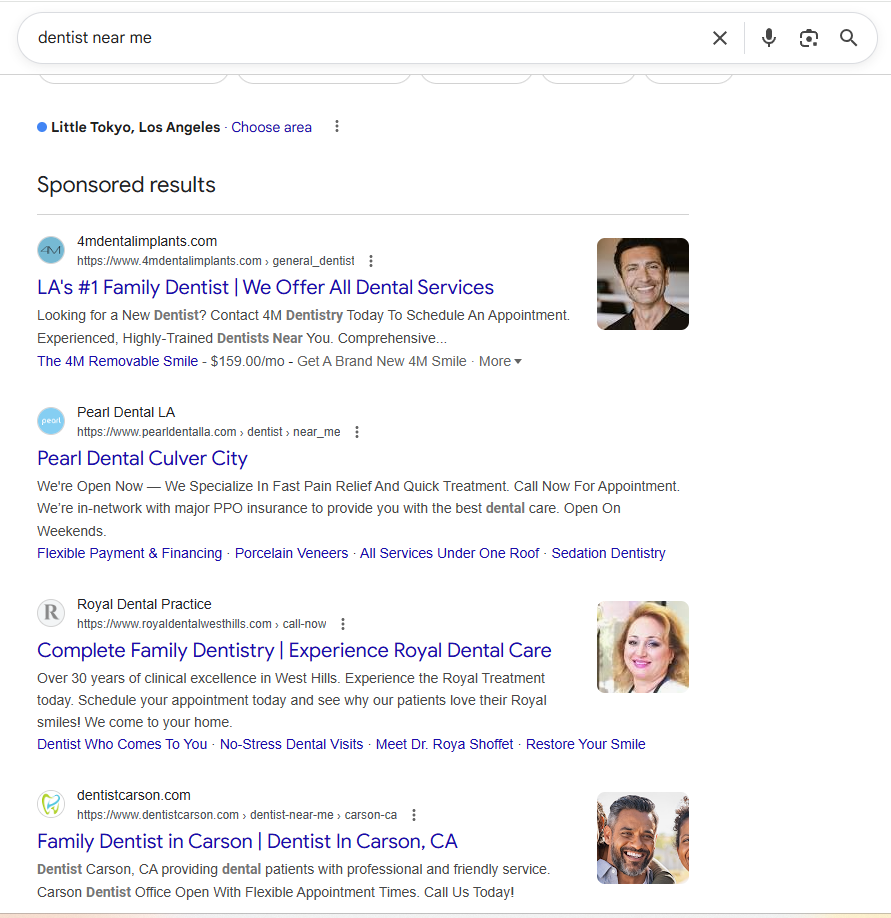
Screenshot provided by the author
Dental SEO targets those searches. It improves:
- Google Maps visibility
- Local search signals
- Service pages
This means practices appear where patients already look before booking appointments.
Dental SEO is different from general SEO
Dental SEO deals with:
- Local competition
- Patient decisions
- Healthcare trust
A law firm or SaaS company doesn’t face the same search behavior.
For example, dental practices need:
- Optimized Google Business Profile
- Treatment-specific pages
- reviews
Patients don’t book their appointment right away. First, they want proof they can trust the clinic.
The goal is patient acquisition, not just traffic
Traffic alone doesn’t grow a dental practice. A page can rank well. But it can still fail to bring appointments.
Strong dental SEO services connect rankings to patient actions. That includes contact form submissions, phone calls, and booked consultations. For example, an emergency dentistry page should drive calls from patients who need treatment fast, not just page visits.
To maximize those opportunities, many practices use a Dental Virtual Assistant to answer inquiries quickly, schedule appointments, and follow up with prospective patients. This helps turn SEO-generated traffic into actual patient bookings rather than missed leads.
Why SEO matters for dental practices now
More patients use Google before booking dental care. They compare clinics, read reviews, and search treatments before making a decision. That makes SEO a strong channel for patient acquisition for modern practices.
Patients research dentists before booking
Patients rarely book the first clinic they find. Most compare reviews, treatment options, and locations before making contact.
Tebra’s 2025 Patient Perspectives Report found that 79% of patients read reviews before choosing a healthcare provider. That affects dental practices, too.

Screenshot provided by the author
Consider a clinic with positive Invisalign reviews. They may attract more consultations than a nearby competitor with weak ratings.
Google Maps drives high-intent leads
Google Maps puts dental clinics in front of patients who want fast care.
Location and convenience also affect booking decisions, according to JLL’s patient consumer survey. This means that a nearby emergency dentist in the Google map pack may get the appointment instead of a higher-ranked clinic farther away.
SEO compounds over time
Paid ads stop working once the budget runs out. SEO keeps driving visibility long after pages go live.
For example, a strong dental implants page can bring leads for months through organic search. Over time, that can lower patient acquisition costs and create a steadier flow of appointment requests.
Many dental practices struggle with SEO because they treat it as a one-time website project rather than an ongoing strategy for bringing in patients. A modern dental website has to do more than just exist online.
It needs to rank locally, answer treatment questions clearly, build trust quickly, and make booking easy on both desktop and mobile. That’s where a specialized dental SEO agency tends to make the biggest difference.
What dental SEO agencies actually do
Strong dental SEO agencies don’t just prioritize rankings. They improve local visibility, create treatment pages, and fix technical problems. They also help practices convert visitors into booked appointments.
The work connects search traffic to patient growth rather than to empty metrics.
Local SEO and Google Business Profile optimization
Local SEO helps dental practices appear in Google Maps and local search results. Agencies optimize:
- Google Business Profile categories
- Business details
- Service areas
- Office photos
- Reviews
They also keep NAP information consistent across directories.
For example, a clinic with matching contact details and strong reviews has a better chance of appearing for “dentist near me” searches.
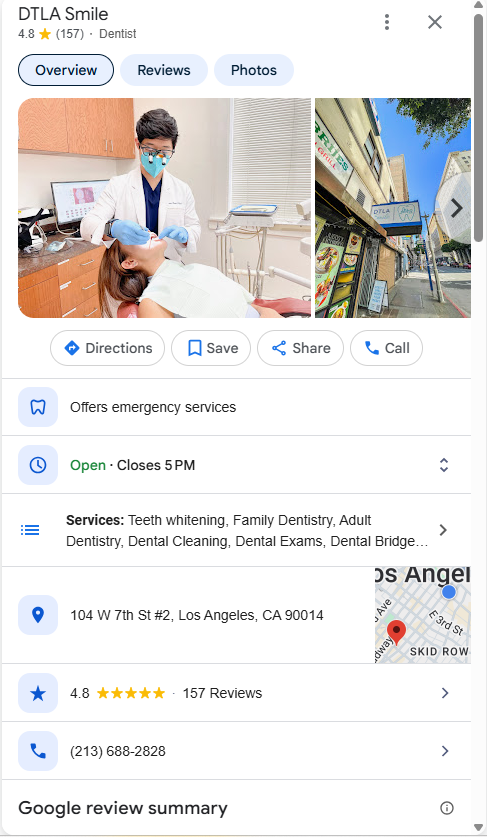
Screenshot provided by the author
Treatment and service page optimization
Agencies build specific pages for Invisalign, implants, and veneers. This targets what people actually type into search bars.
Zocdoc found that dental pain visits grew 100% year over year for women and 119% for men in 2024, supporting the creation of pages for urgent dental needs.
A dedicated “Emergency Dentistry” page is a great example of how to capture this intent.
Technical SEO fixes
Technical SEO improves how dental websites perform and how search engines crawl pages. Agencies fix:
- Weak mobile performance
- Broken internal links
- Slow load times
- Security issues
They also improve schema markup and crawlability. Mobile experience should be a priority for dental practices. This means that patients can easily access a dental company’s website on their mobile phone.
In fact, many patients are using their phones for healthcare. The Zocdoc research mentioned above found that 60% of dental appointments were made on mobile devices in 2024. A site that loads slowly on a phone will lose patients to a competitor that loads faster.
Content creation for patient education
Agencies write FAQs and treatment explainers to build trust with readers. This content answers common questions about procedures like root canals. It makes patients feel more comfortable before they even walk in.
For example, a blog post titled “What to expect during a teeth cleaning” can ease a new patient’s nerves.
Reputation management and reviews
Reviews impact both your rank and whether people trust you. Agencies help you get more feedback and show you how to respond to patients. This makes your practice look active and caring.
A quick response to a five-star review shows potential patients that you value your community.
Conversion optimization
SEO traffic means little if patients never contact the clinic. Agencies improve:
- Appointment forms
- Mobile usability
- CTAs
For example, a mobile visitor searching for an emergency dentist should reach the office in one tap. Small conversion fixes can increase appointment requests without increasing traffic.
Signs a dental SEO agency is worth hiring
Not every healthcare SEO agency understands how dental marketing works. Strong agencies focus on patient growth and communicate clearly. They also connect SEO work to real business results instead of surface-level metrics.
They focus on revenue and appointments
Good agencies track calls, appointment forms, and patient growth instead of vanity metrics like impressions alone.
For example, you can’t focus on just ranking first for “teeth whitening”. Otherwise, patients won’t ever contact the office. Strong agencies connect SEO performance to consultations, booked treatments, and revenue growth.
They understand healthcare and dental marketing
Dental marketing comes with different expectations than other industries. Agencies should understand:
- Healthcare trust standards
- Medical content quality
- HIPAA awareness
Take a dental implants page, for example. It should explain treatment information clearly and in a trustworthy way. Weak or misleading content can hurt patient trust before the first appointment.

They explain strategy in plain English
SEO shouldn’t sound confusing. Dental SEO agencies should explain:
- What they’re doing
- Why they’re doing it
- What results should practices expect over time
For example, they should explain why local pages or review campaigns drive appointment growth rather than hiding behind technical jargon and unclear reports.
They show real dental SEO case studies
Strong agencies back up claims with proof. That includes:
- Lead increases from dental campaigns
- Before-and-after examples
- Local ranking growth
For example, an agency may show how a practice improved visibility for “emergency dentist” searches and increased appointment requests after optimizing treatment pages.
Red flags to avoid when choosing dental SEO services
Not all agencies play by the rules. Some use shortcuts that can hurt your clinic in the long run. Watch out for these warning signs before you sign any contract.
Guaranteed rankings
No one controls Google’s algorithm. That makes guaranteed rankings unrealistic, especially in competitive dental markets.
For example, an agency promising a #1 ranking for “dentist near me” within weeks should raise concerns. Search results change often. And no SEO provider can guarantee exact positions.
Cheap SEO packages with vague deliverables
Low-cost SEO packages often rely on:
- Generic location pages with little value
- AI spam content
- Weak backlinks
Some agencies create near-identical city pages for every location without useful treatment information. That type of content can hurt trust. It can also fail to bring real appointment requests.
Agencies that don’t discuss conversions
Rankings alone don’t grow a dental practice. Agencies should discuss calls, form submissions, and appointment tracking from the start.
For instance, a clinic may gain traffic for veneer searches. But they may still see no patient growth if visitors never contact the office.
No transparency around reporting or work completed
Credible agencies explain what work gets completed each month. Practices should see reports, deliverables, and clear communication.
Here’s an example. An agency cannot show what pages or SEO updates they completed. This means the practice has no visibility into the strategy or campaign progress.
Best dental SEO agencies and services
Dental practices need agencies that understand local search, patient intent, and appointment growth. These agencies each approach dental SEO from a different angle. The right fit depends on the clinic’s goals and growth stage. Pricing also varies by strategy and scope.
With the rise of AI Overviews and conversational search, agencies are increasingly expected to improve a clinic’s visibility beyond traditional rankings. Many forward-thinking teams now use an AI visibility engine to monitor brand mentions and help ensure their practice appears in AI-generated recommendations when patients search for local dental care.
Some agencies focus heavily on authority and backlinks, while others prioritize content production, technical SEO, or conversion tracking.
uSERP

uSERP works well for dental practices competing in crowded local markets. It focuses on:
- Strong content strategies
- Authority-driven SEO
- Editorial backlinks
These help clinics rank for competitive healthcare searches. Instead of relying on surface-level metrics, uSERP ties SEO work to revenue growth, qualified leads, and patient acquisition.
Codeless

Codeless is a strong fit for practices investing in content-led growth. The agency focuses on expert-written educational content. This is built around patient search intent.
Dental practices can use Codeless to scale:
- Treatment pages
- Blog content
- FAQs
The agency works well for clinics that want long-term organic visibility through content marketing.
WebFX

WebFX offers a full-service approach. It suits dental teams that want SEO, web design, and conversion support from a single provider.
The agency has healthcare marketing experience and strong reporting systems that track campaign performance across calls, leads, and traffic. It can work well for growing practices that want broader digital marketing support alongside SEO.
Straight North

Straight North focuses on lead generation and conversion tracking for service businesses. It places strong attention on:
- Appointment-focused reporting
- Lead attribution
- Call tracking
Dental practices that prioritize patient inquiries over traffic numbers may benefit from Straight North’s performance-focused approach to SEO campaigns.
Questions to ask before hiring a dental SEO agency
You need to know if an agency can actually deliver more patients to your door. Dig deep into their process before you sign any contracts.
Use these questions to find the right partner for your clinic.
- Have you worked with dental or healthcare clients before? Industry experience is vital because patient search behavior is unique. An agency that knows dentistry will understand how to target high-value treatments like dental implants.
- How do you measure SEO success? Look for an agency that tracks booked appointments and phone calls. Not just clicks. They should provide clear ROI tracking. This shows how your marketing spend turns into revenue.
- What does your reporting include? Your reports should provide full transparency into leads, traffic, and conversion metrics. A good report shows exactly how many people filled out your contact form.
- What work will you complete each month? Ask for a list of tasks. These can include content creation, technical fixes, and GBP optimization. A solid plan might include building two new treatment pages and managing your Google reviews.
Wrap up
Dental SEO services help practices reach patients already searching for care. The right agency:
- Prioritizes revenue over surface-level metrics
- Increases appointment requests
- Improves visibility
Not every SEO provider delivers the same quality. Don’t sign a contract right away. Take time to review case studies and service scope first.
The best partner should show how search visibility turns into calls, consultation requests, and booked appointments.
If your practice wants stronger organic growth and more patient inquiries, book a strategy call with Codeless. Explore how the right SEO strategy can help fill more appointment slots.